 PIRANHA
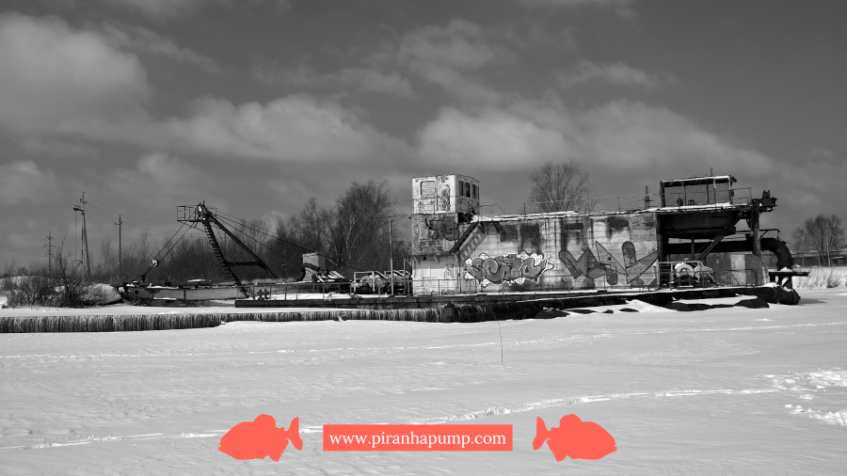
Winter temperatures bring changes to the worksite, and keeping your pump flotation platforms functioning efficiently is essential. This winter mode extends across everything–whether it be dredging, water transfer, pond maintenance, or industrial applications. One of the biggest challenges of winter weather? Frozen lines. A frozen discharge or suction line can halt operations, damage equipment, and create expensive downtime.
This guide walks you through how to maintain flotation platforms in cold weather and prevent frozen lines. while also covering key concepts around types of pumps, water movement, and winter-readiness for hydraulic equipment.
Why Frozen Lines Are Such a Problem
If you think that frozen lines are just an inconvenience, think again. They can create blockages that increase internal pressure, damage hoses, and compromise your submersible water pump, positive displacement pump, or other industrial pumps essential to your projects.
If your platform uses submersible pumps, sludge pumps, or a suction pump setup for sediment or pond dredging, maintaining continuous flow is crucial. Water sitting still inside the hose is the fastest way to allow ice buildup. But knowledge is power. Understanding pump flow rates helps maintain enough movement to minimize freezing.
Understanding Dredging in a Winter Context
Many flotation platforms are used in dredging, especially for ponds, tailings, lagoons, and canals. But what is dredging? It is the process of removing sediment, debris, or sludge from the bottom of a water body to maintain depth or restore function.
Dredging may sound simple enough, but winter adds complexity. Semi-frozen water, slush, and ice sheets all complicate sediment removal. To support winter operations, pump platforms must stay afloat, aligned, and able to move material effectively.
Key Winter Maintenance Tips for Pump Flotation Platforms
1. Keep Water Moving Through the System
Stagnant water freezes quickly. Using submersible water pumps, sump pump submersible systems, or self-priming pumps that maintain consistent flow prevents ice blockages. For platforms with VFD or VFD pump drives, adjusting pump speeds can keep water circulating even if you’re working at reduced winter capacity.
2. Insulate Hoses and Exposed Lines
Any exposed discharge, suction, or return line is at risk from the winter chill. Use flexible, weatherproof insulation around critical areas. Heavy-duty insulated wraps can protect everything from submergible water pumps to large-diameter hoses.
Even the different categories of pumps—from industrial water pumps to irrigation water pumps—benefit from insulated connections during freezing temperatures.
3. Elevate or Shield Pumps From Direct Icing
If your platform includes a submersible pump, keeping the pump deep enough in non-freezing water is vital. Ice typically forms near the surface first. Keeping equipment submerged reduces freeze exposure.
Equipping your platforms with wind guards or protective panels can also help to shield mechanical components from ice buildup.
4. Check and Maintain Priming Systems
Many flotation systems rely on pump priming or priming the pump to keep things flowing. Any trapped air or partial vacuum can stall movement, which invites freeze conditions.
If you operate a self-priming water pump, make sure that all priming chambers are cleared of debris and protected from ice. Broken priming chambers can create blockages or require mid-winter repair, which is never ideal. We want your projects to stay on track and on budget!
5. Monitor Power Sources and Controls
Cold weather can interfere with power cables, battery systems, and VFD controls. Regularly inspect the electrical systems supporting your industrial pump arrangement.
A damaged line or fluctuating voltage can cause significant operational issues, like reducing flow and increasing freeze risk. For complex setups, winter electrical checks are essential.
6. Prevent Sediment Overload
Frozen sediments turn extremely dense and can overwhelm even the best kind of pumps. Winter sludge is heavier and harder on equipment. Keep intake screens clean, inspect the housing regularly, and avoid overloading your pump beyond its rated flow.
Partner With Reliable Pump Manufacturers
High-quality pumps make all the difference in winter reliability. Working with an experienced pump manufacturer like Piranha Pumps ensures that your equipment is up to the task of winter workloads. Contact us today to get started!